The girdle of Venus is a curved line high on the palm, above the heart line and just below the base of the fingers. Palmistry guides usually link it with strong feeling and a keen eye for beauty. Many palms have no such line at all, and most sites that discuss this treat having none as normal.
This guide shows where to look, the main types, what palmistry sites say each one means, and how to tell a true girdle from a look-alike. Scientists classify palmistry as pseudoscience, so treat everything below as tradition, not fact. It cannot diagnose a condition or forecast your future. Every drawing shows a right palm, and on a left palm the picture is mirrored.
Table of Contents
What Is the Girdle of Venus?
The girdle of Venus is an arc, or a chain of short arcs, that curves above the heart line. It is a minor line, so many palm charts leave it out. Three sites also call it the Ring of Venus.
The name can mislead. One guide points out that the line does not cross the Mount of Venus, the pad at the base of the thumb. The name points to Venus, the planet palmistry ties to love and beauty.
Where the Girdle of Venus Sits on the Palm
Most guides describe the same course. The arc begins in the gap between the index and middle fingers. It dips beneath the middle and ring fingers and ends in the gap between the ring and little fingers. A few guides give slightly different end points, so treat these two gaps as a rough guide.
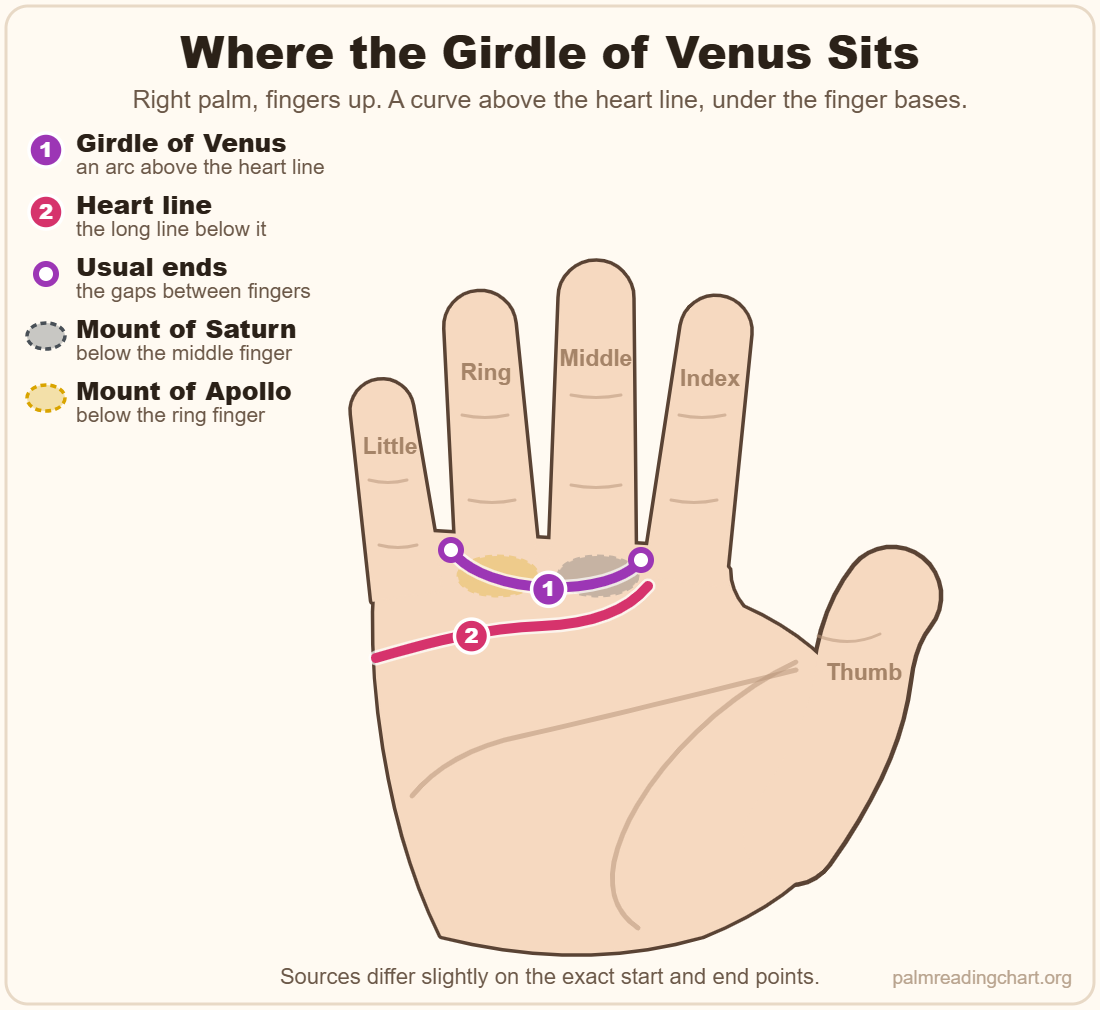
Figure 1 shows this course. Two guides say the arc crosses the Mount of Saturn and the Mount of Apollo, under the middle and ring fingers. Our guide to the mounts of the palm shows where each pad is.
How to Find It on Your Own Hand
- Open your hand in soft daylight with the fingers slightly apart.
- Find the heart line, the highest long line across the palm.
- Look in the narrow band between the heart line and the base of the fingers.
- Look for a curve that rises toward a finger gap at each end.
- Tilt the palm slowly. A faint line may show only at certain angles.
- Check both hands, then compare any line you find with the look-alikes in Figure 3.
Girdle of Venus Types: Full, Partial, Broken, Fragmented, Faint and Double
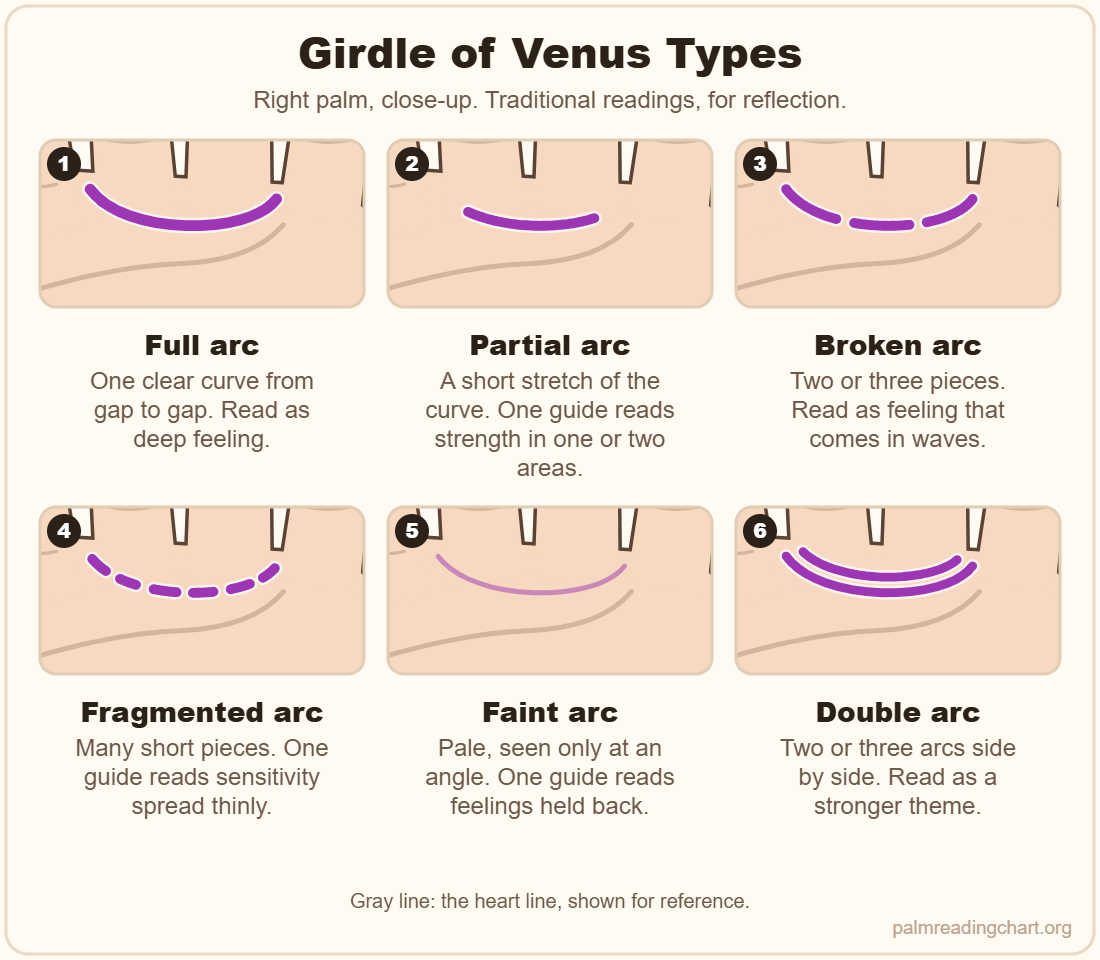
Palmistry sites describe a handful of patterns, shown in Figure 2. Every site we read names a broken or fragmented form, and three call it common. Guides disagree on which shape is most common.
Full Arc
A full girdle is one clear curve from gap to gap. Guides that describe it read a deep emotional life and a taste for art and beauty. One adds that an unbroken line suggests steady, even sensitivity. Two guides call a full arc uncommon or rare.
Partial Arc
A partial girdle covers only a stretch of the curve. One guide calls it the most common shape, usually the stretch under the middle and ring fingers. Another reads it as feeling that is strong in one or two areas of life instead of everywhere.
Broken or Fragmented Arc
A broken girdle has two or three pieces, and a fragmented one has many short pieces. Several guides read feeling that arrives in waves instead of at one steady level. One calls this a healthy rhythm of intensity, rest and recovery, and another reads many small pieces as sensitivity spread thinly.
Sites differ in tone here, and a few use harsher words. This guide keeps to the gentler wording because no evidence backs the harsher versions.
Faint Arc
A faint girdle is so light that it may show only when you turn the palm. One guide reads it as feelings held back or talents not yet fully used.
Double or Triple Arc
Two or three arcs side by side are read as a stronger version of the same theme. Several guides describe this form. Two suggest a creative or grounding outlet for that intensity. One site treats a second line beside the heart line as a separate feature, not a double girdle. The look-alike section below explains the difference.
No Girdle at All
Many hands have no clear girdle. Most sites that discuss this treat it as neutral. One stresses that having none does not mean you feel less. In that view, feeling runs mainly through the heart line or the Mount of Venus instead.
What Does the Girdle of Venus Mean?
Most guides link the girdle with sensitivity and emotional intensity, and several add a sense of beauty or creative talent. One guide describes it as a line that modifies the heart line reading instead of replacing it. Two guides also tie it to intensity in romantic feeling. For the heart line itself, see our heart line guide.
Older Western books read the girdle harshly. Most modern sites that mention this call that reading outdated. One guide credits the palmist William Benham with a gentler view, in which strong feeling is a resource instead of a flaw. This guide leaves the harsh older readings out.
| Type | What you see | What guides say |
|---|---|---|
| Full arc | One clear curve from gap to gap | Deep feeling and a taste for beauty |
| Partial arc | A short stretch of the curve | Feeling that is strong in one or two areas (one guide) |
| Broken arc | Two or three pieces | Feeling that comes in waves (several guides) |
| Fragmented arc | Many short pieces | Sensitivity spread thinly (one guide) |
| Faint arc | A pale line that may show only at an angle | Feelings held back or talents not yet fully used (one guide) |
| Double or triple arc | Two or three arcs side by side | A stronger version of the theme (several guides) |
| No girdle | No arc above the heart line | Neutral (most sites that discuss it) |
Is the Girdle Rare?
Guides disagree. Two give figures between about 25 and 35 percent of hands. One says most people do not have a girdle and that a complete, unbroken one is rare. Two guides say no reliable study exists, and one of them still offers rough ranges. Another calls the line rare, yet also calls its broken form extremely common.
Several guides say artists, musicians and performers are especially likely to have one. None cites evidence. Treat every figure and every claim about who has a girdle as a rough guess.
Girdle of Venus vs Double Heart Line and Other Look-Alikes
The girdle is low in contrast and sits close to other creases, so it is easy to confuse with something else.
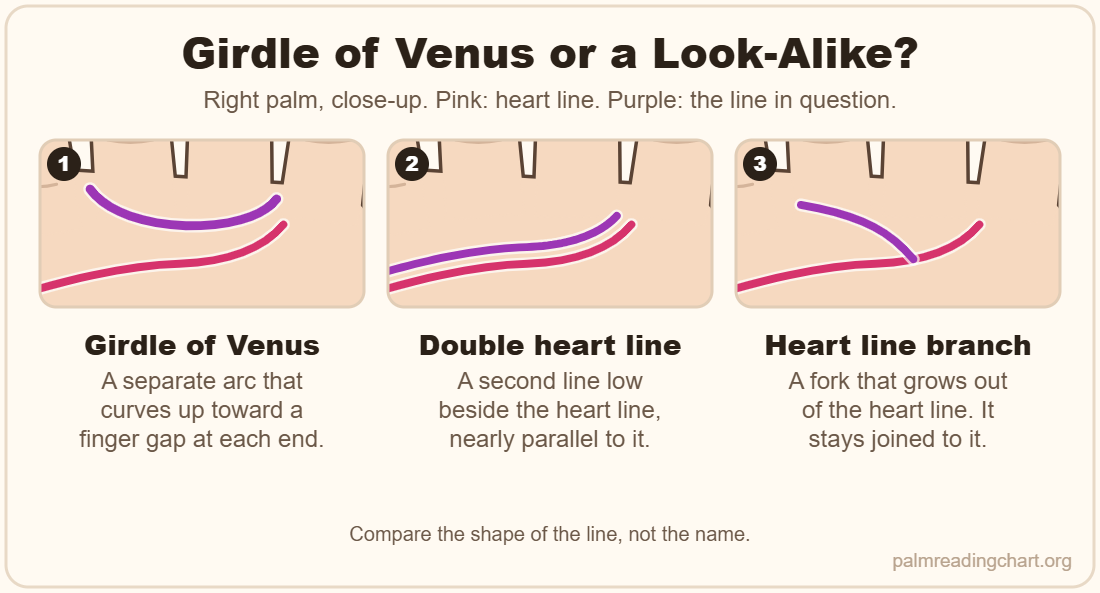
One guide describes a double heart line as mostly flat, close to the heart line and nearly parallel to it, ending below the index and middle fingers. A girdle is a higher semicircle that curves up toward a finger gap at each end. A simple test is to trace upward from the heart line and see whether the second line curves away toward the finger bases.
Sites use the name “sister line” for different features, so check the shape, not the name. One site also warns that a faint, low arc can be mistaken for a branch of the heart line. Ask whether the line is a separate arc or a fork that grows out of the heart line.
Other look-alikes include the simian line, a single crease across the palm, which one guide lists as another feature that can be mistaken for the girdle. See our simian line guide for the difference. One guide also separates the girdle from a much smaller arc under the index finger, called the ring of Solomon.
Folds and dry skin can mimic a line. Do not join unrelated creases to make an arc. If you cannot tell a line from surface texture, say “unclear”.
Which Hand Do You Read for the Girdle?
Most guides do not say. One tells readers to look at the dominant palm. Another follows the usual split: the non-dominant hand shows what you were born with, and the dominant hand shows what life has added. By that split, a girdle on both hands is a built-in trait that experience has reinforced. A girdle on the dominant hand only is a trait that grew through experience. One guide reads a girdle on the non-dominant hand only as inborn sensitivity that life has partly smoothed out.
This site follows the second approach: read both hands and compare them. Our guide to which hand to read explains the method.
Reading the Girdle With the Rest of the Hand
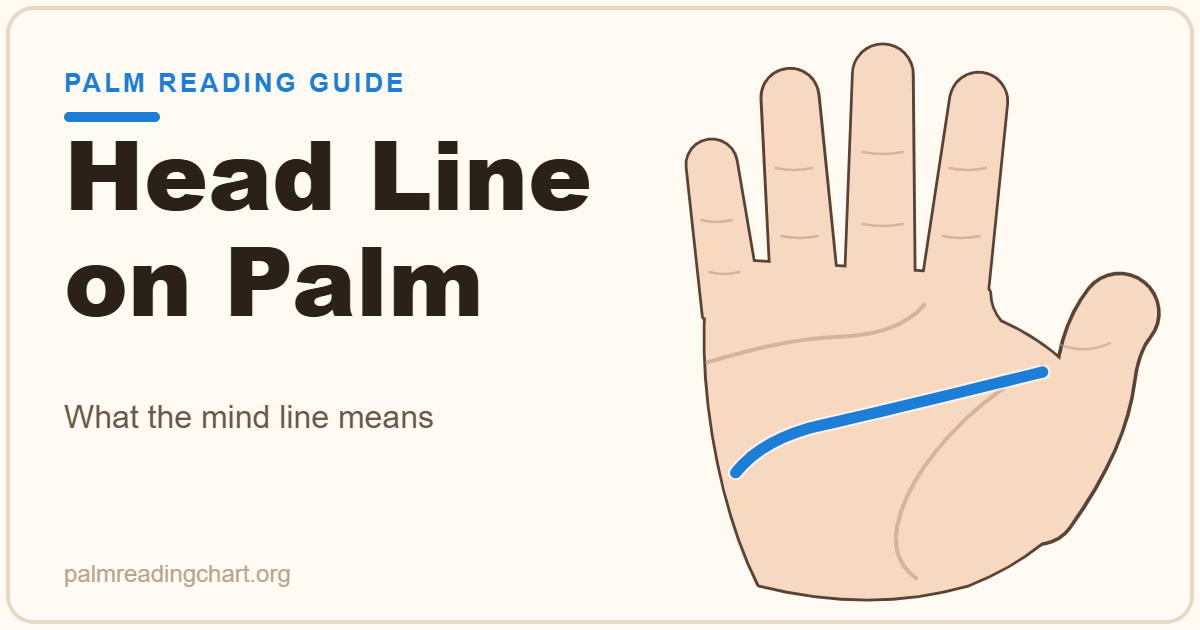
Guides that cover the girdle say to read it with other features, not on its own. Several name the heart line or the head line as the main lines to compare, two add the sun line, and one adds the Mount of Venus. One says a strong head line steadies the girdle toward creative work. Another says a strong heart line deepens the emotional tone.
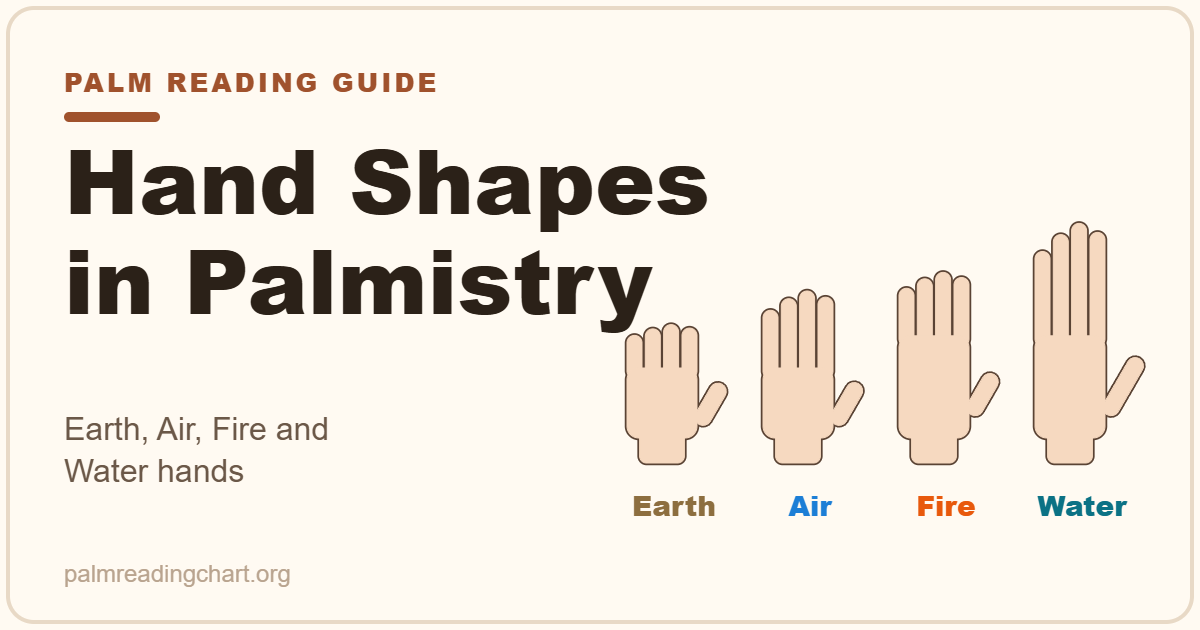
If you are new to this, start with the four main lines in our step-by-step palm reading guide. Then look at the head line and the sun line. Hand shape is one more layer, covered in our guide to hand shapes in palmistry. For a wider overview, see palm lines and what they mean.
What the Girdle Cannot Tell You
Palmistry has no scientific backing. A girdle is not a medical sign, and it does not set how you will love or feel. Several guides say this directly. If strong emotions feel overwhelming, a doctor or counselor is the right person to ask, not a palm.
Girdle of Venus FAQ
Is the girdle of Venus good or bad?
Guides differ. Most link it with sensitivity and creativity, and a few use harsher words. No evidence supports either label, so this guide treats it as a neutral trait.
What does a broken girdle of Venus mean?
Guides usually read feeling that comes in waves. One adds that a break is not a sign of trouble in love. Readings differ, so do not treat any of them as a verdict.
What if I have no girdle of Venus?
Many hands have none. Most sites that discuss it treat it as neutral, so look at the heart line next.
Is the girdle of Venus the same as a double heart line?
No. A double heart line runs low beside the heart line, while a girdle is a separate arc above it. Compare your hand with Figure 3.
Can I spot a girdle of Venus in a photo?
Not reliably. Glare, angle and dry skin can create or hide lines, so check your real palm in soft daylight.
Conclusion
The girdle of Venus is a minor line that arches above the heart line, and tradition links it with strong feeling and a love of beauty. Check the shape, compare both hands, and remember that most guides treat a missing girdle as neutral. For the bigger picture, our palm reading chart shows how the girdle fits with the main lines and mounts.

Leave a Reply