How to read your palm is a short routine: look at the whole hand, trace the four main lines, then check the details. You need no special training, and you can try every step in one sitting.
This tutorial splits that routine into seven steps, with two diagrams and a worked example. Every palm diagram shows a right palm.
Treat each reading as a prompt for reflection, not a forecast. Wikipedia’s entry on palmistry describes it as a pseudoscience, so please use these steps for curiosity and fun.
Table of Contents
How to Read Your Palm: Step by Step
Guides do not agree on one order. Several start with the whole hand and leave minor lines and special signs for last, and the steps below follow that pattern.
Step 1: Set Up Good Light and a Relaxed Hand
Sit by a window in daylight, with your palm open and your fingers relaxed. Several guides recommend good, even light, and one warns that harsh artificial light and a night-time phone flash make lines harder to read. Use a photo only as a backup, since one guide notes that photos miss texture and flexibility.
Step 2: Choose Which Hand to Read
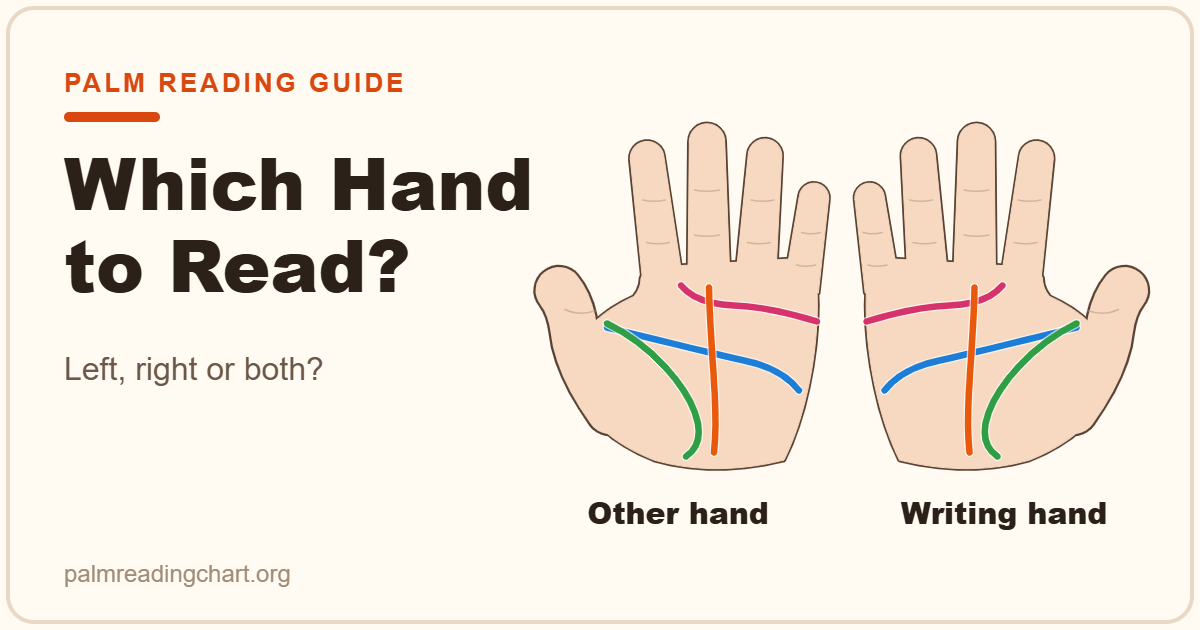
Most guides treat your writing hand as the record of your present life, and the other hand as the one you were born with. Most also recommend reading both and comparing them, usually starting with the writing hand. Our guide to which hand to read sets out the rule and how to compare your two hands.
Step 3: Note Your Hand Shape
Look at the palm and fingers together. Most guides sort hands into four shapes called Earth, Air, Fire and Water. The sorting depends on two questions: is the palm square or long, and are the fingers short or long? Sources describe the details differently, and several say many hands blend two shapes. Our palm reading chart shows the four shapes side by side and labels the mounts.
Step 4: Trace the Four Main Lines
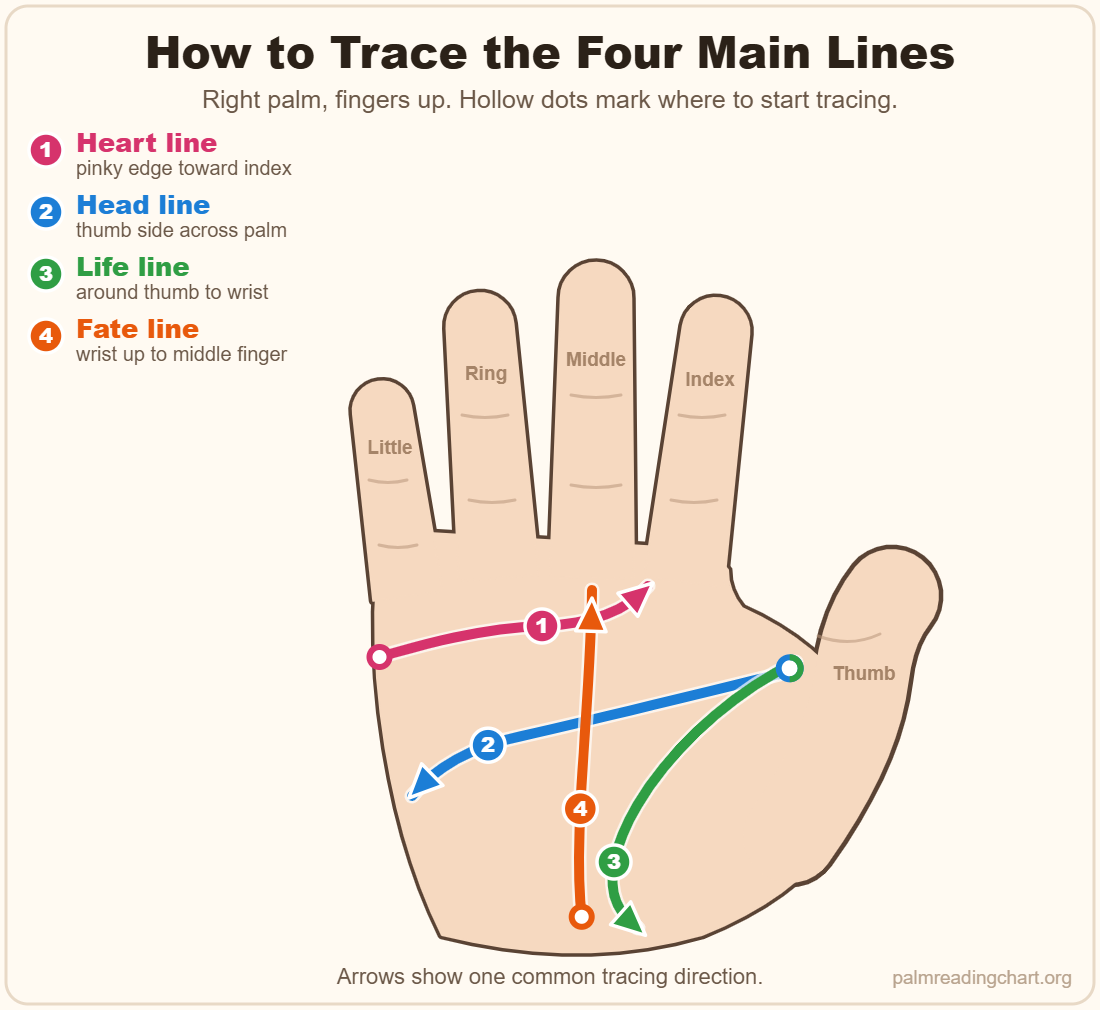
Now trace each main line once, starting at the hollow dots in the diagram. Write down what you see before you look up any meaning.
| Line | Where it runs | Traditional theme | Read more |
|---|---|---|---|
| 1. Heart line | Across the upper palm, under the fingers; commonly traced from the little-finger edge toward the index finger | Emotions and how you relate to others | Heart line guide |
| 2. Head line | Across the middle of the palm from the thumb side, often starting close to the life line | How you think and decide, not how smart you are | Head line guide |
| 3. Life line | Arcs from the thumb side down toward the wrist, enclosing the base of the thumb | Vitality, energy and major life changes, not length of life | Life line guide |
| 4. Fate line | Vertically through the center of the palm toward the middle finger; many hands lack one | Career direction and life path | Fate line guide |
Most guides count four main lines, though some treat the fate line as secondary. Two guides trace the heart line from the finger end instead, so the direction matters less than following the whole line. Several start the head line on the thumb side, and some note that it may touch or separate from the life line.
Step 5: Judge Each Line’s Quality
For every line, ask four questions. How deep and clear is it? How long does it run? Is it straight or curved? Does it break, fork or carry marks?
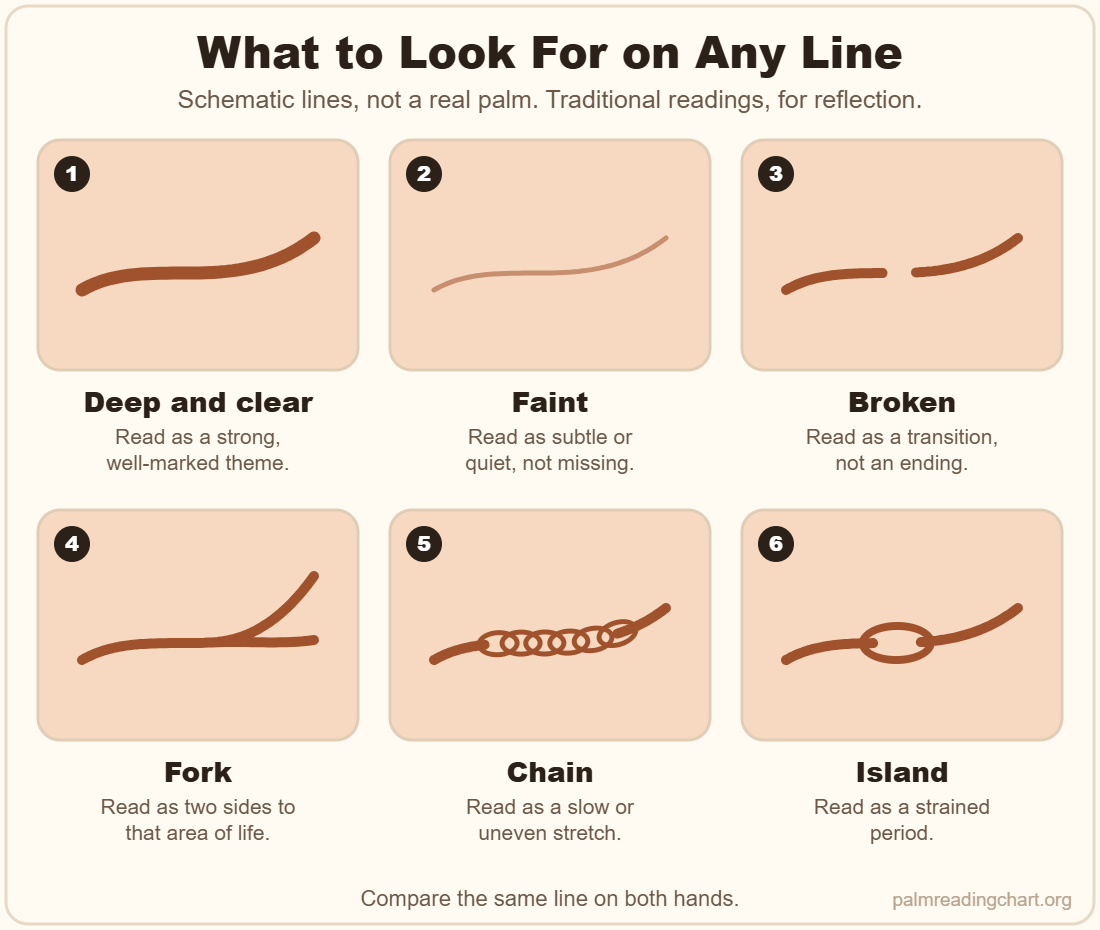
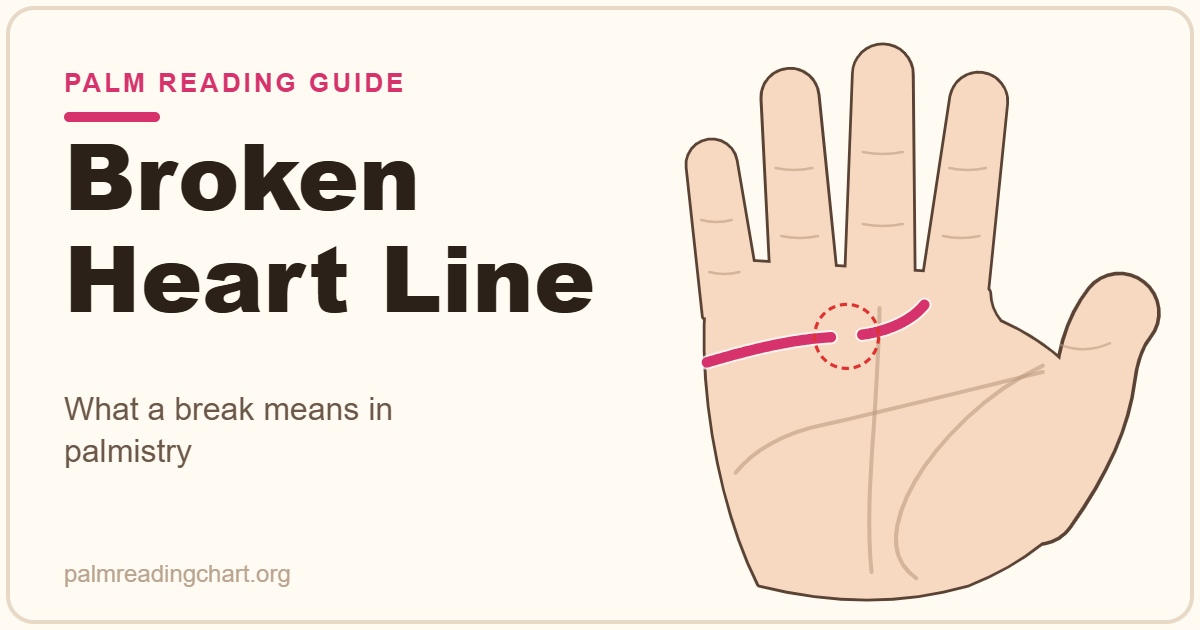
One guide says depth and clarity matter more than length, and some guides read a faint line as subtle rather than missing. Several read a break as a transition, not as bad news. Two guides read a fork as two qualities side by side, and several read an island as a strained period. Two read a chain as a rougher stretch.
Shape matters too. Most guides read a straight head line as analytical thinking and a curved one as a more imaginative style. Guides disagree on details, so treat each reading as a starting point.
Step 6: Check the Mounts and Minor Lines Last
Mounts are the raised pads at the base of the fingers and the thumb, and along the palm edge. Several guides read a well-developed mount as a stronger theme and a flat one as a quieter theme.
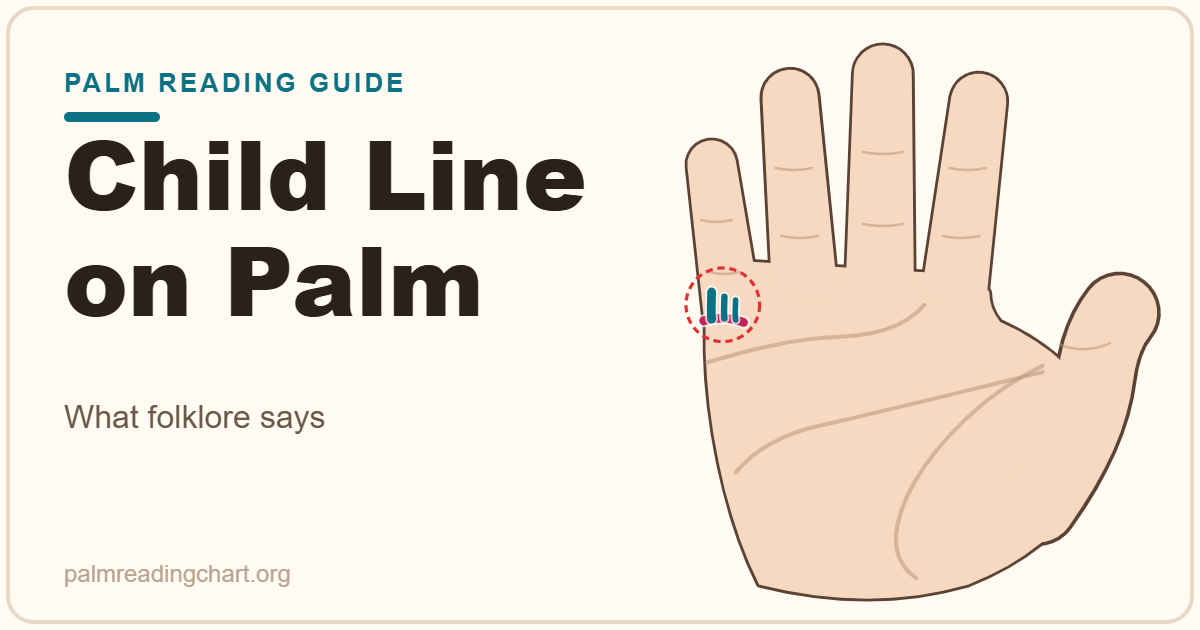
Minor lines come after the major lines are clear. Look for a line rising toward the ring finger, a line slanting toward the little finger and small horizontal lines under the little finger. Our guides cover the sun line, the health line and the marriage lines. If your head and heart lines merge into one, see our simian line guide.
Step 7: Put It Together and Write It Down
Finish with two or three sentences that combine what you saw. The table shows a worked example for an imaginary right hand. It uses readings that guides commonly give, and it keeps each one tentative.
| What you see | Traditional reading | How you might note it |
|---|---|---|
| Square palm with long fingers | The Air shape in the common four-shape system | Air-type hand, though sources differ on the details |
| Heart line long and curved, ending under the index finger | Expressive, idealistic feeling (several guides) | Heart line: expressive, possibly idealistic |
| Head line straight across the palm | Analytical thinking (most guides) | Head line: analytical |
| Life line a wide arc around the thumb | An adventurous or enthusiastic approach to life (several guides) | Life line: wide arc, which is not a measure of lifespan |
| Fate line faint | Not a lack of direction (two guides); one guide reads it as more change or searching | Fate line: faint, so I will compare my other hand |
| No clear sun line | Sun line guides call this common and do not read it as failure | Sun line: not visible, so I will leave it out |
A short note from this example might read: Air-type hand, expressive heart line, analytical head line, wide life line and a quiet fate line. Then repeat the steps on your other hand and compare the notes.
Common Beginner Mistakes
- Treating a short life line as a short life. Most guides call this a myth, since the life line is read as vitality, not lifespan.
- Reading one line alone. Several guides say to read features together, and one says a single line can be outweighed by another.
- Reading only one hand. Several guides warn against this and ask you to compare both.
- Giving minor lines too much weight. Two guides say no single mark is a verdict on its own.
- Reading in poor light. Several guides recommend good, even light.
- Expecting dates or events. Several guides describe palm reading as a map of tendencies, not a fixed future.
- Reading only your own palm. Two guides say this is harder to do objectively, and one suggests practicing on a friend’s palm first.
What Palm Reading Cannot Tell You
Many guides call palmistry symbolic rather than scientific, and one says no controlled study has confirmed that palm lines predict life events. Most guides add that lines can change over time, so a reading is a snapshot of your hand today. Please do not use it to make health, money or relationship decisions.
How to Read Your Palm FAQ
How do I read my own palm?
Follow the seven steps above, from good light and your choice of hands to a short written summary. Two guides say reading your own palm is harder to do objectively, so a friend’s palm can be good practice.
Which hand should I read first?
Most guides start with your writing hand, which they read as your present life, and then compare your other hand to it.
Which line should I read first?
Guides disagree. One suggests starting with the heart line and working down. Another says beginners often make a mistake by starting with the life line instead of the head line. Pick one order, such as heart, head, life and fate, and use it every time.
Why can I not see some of my lines?
Faint lines are common, and not everyone has a fate line. Sun line guides call a missing sun line common too. Try even daylight and a relaxed hand, and compare both palms before you decide a line is missing.
Does a short life line mean a short life?
No. Most guides say the life line shows vitality and major changes, not how long you will live.
Do palm lines change?
Most guides say they can, which is why a reading works as a snapshot of the hand today.
Conclusion
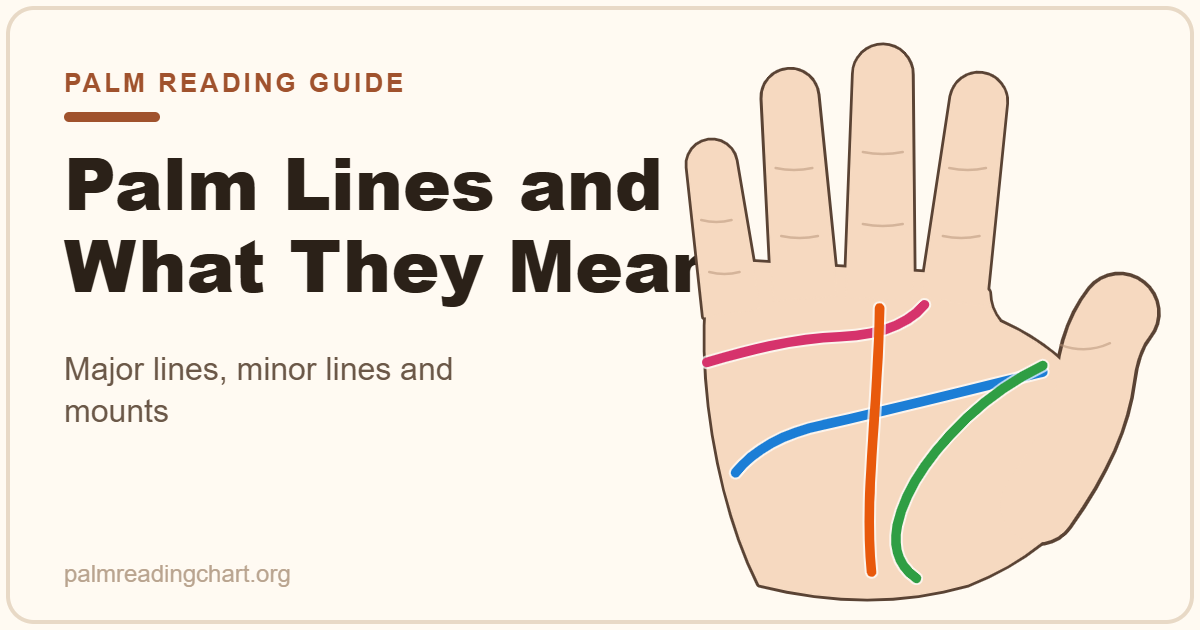
How to read your palm comes down to seven steps. Set up good light and choose your hands. Note the hand shape, then trace the four main lines and judge each line’s quality. Check the mounts and minor lines last, and write a short summary. Keep every reading tentative, compare both hands and let the tradition prompt questions rather than answers. For a wider view of every line, see palm lines and what they mean.


Leave a Reply