The children line on palm is a set of tiny upright lines on the outer edge of the hand, just above the marriage line. Palmistry guides count them to talk about the young people who matter in a person’s life, and many readers hope the number shows how many children they will have. Most guides treat the count as a symbol, not a forecast.
Palmistry is classed as a pseudoscience, and marks on the skin cannot say whether or when anyone becomes a parent. Enjoy what follows as folklore, and base family decisions on real life and on medical advice. The drawings show a right palm, so mirror them for a left palm.
This guide covers where to look, a step-by-step way to count, which marks count, and what each count is said to mean. For the boy-or-girl folklore and the shapes of single lines, see our guide to child line palm reading.
Table of Contents
What Is the Children Line on Palm?
Guides use several names for these marks, including children lines, kids’ lines and child lines. They are short upright strokes that rise from the marriage line toward the base of the little finger. Every guide we read places them on the little-finger edge of the palm, and about half name the Mount of Mercury, the pad under that finger. To see where that pad sits, open the mounts of the palm overview.
The marriage line is the place to start, since the children lines rise from it. If you have not found yours yet, learn where the marriage lines are first.
Where to Find Children Lines on Your Palm
Turn to the side of your palm that sits under the little finger, a little above the heart line. The marriage line is a short sideways stroke there, and children lines are fine upright strokes standing on it. These marks are tiny, so light matters. Most guides ask for good light, and three suggest a magnifying glass.
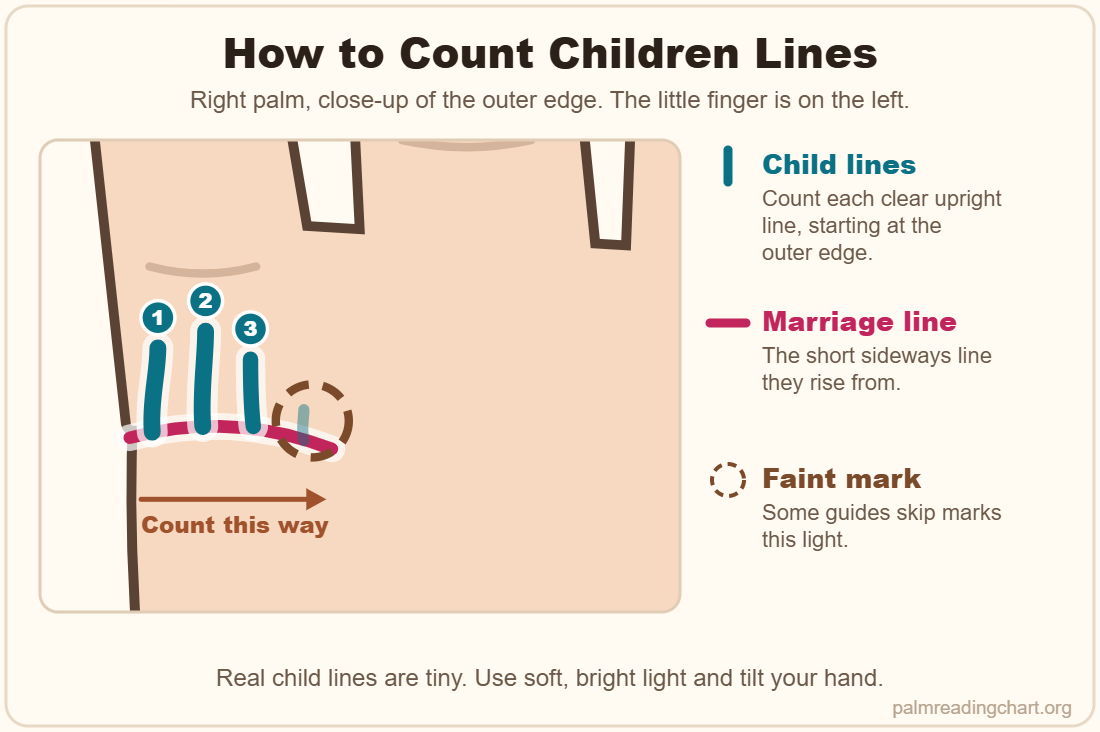
Figure 1 shows the area and the counting direction. The three clear lines are numbered, and the dashed ring marks a faint stroke that some guides would skip.
How to Count Children Lines, Step by Step
- Open your hand in soft, bright light and tilt it slightly so the outer edge catches the light.
- Find the marriage line, the short sideways stroke under the little finger.
- Look just above it for fine upright strokes that stand on the line.
- Count only the clear, separate strokes. Two guides count from the outer edge inward, which is the direction in Figure 1.
- Note any line that looks deeper than the rest. Most guides read depth as the strength of a bond.
- Repeat on your other hand and compare the two counts.
Which Marks Count as a Child Line
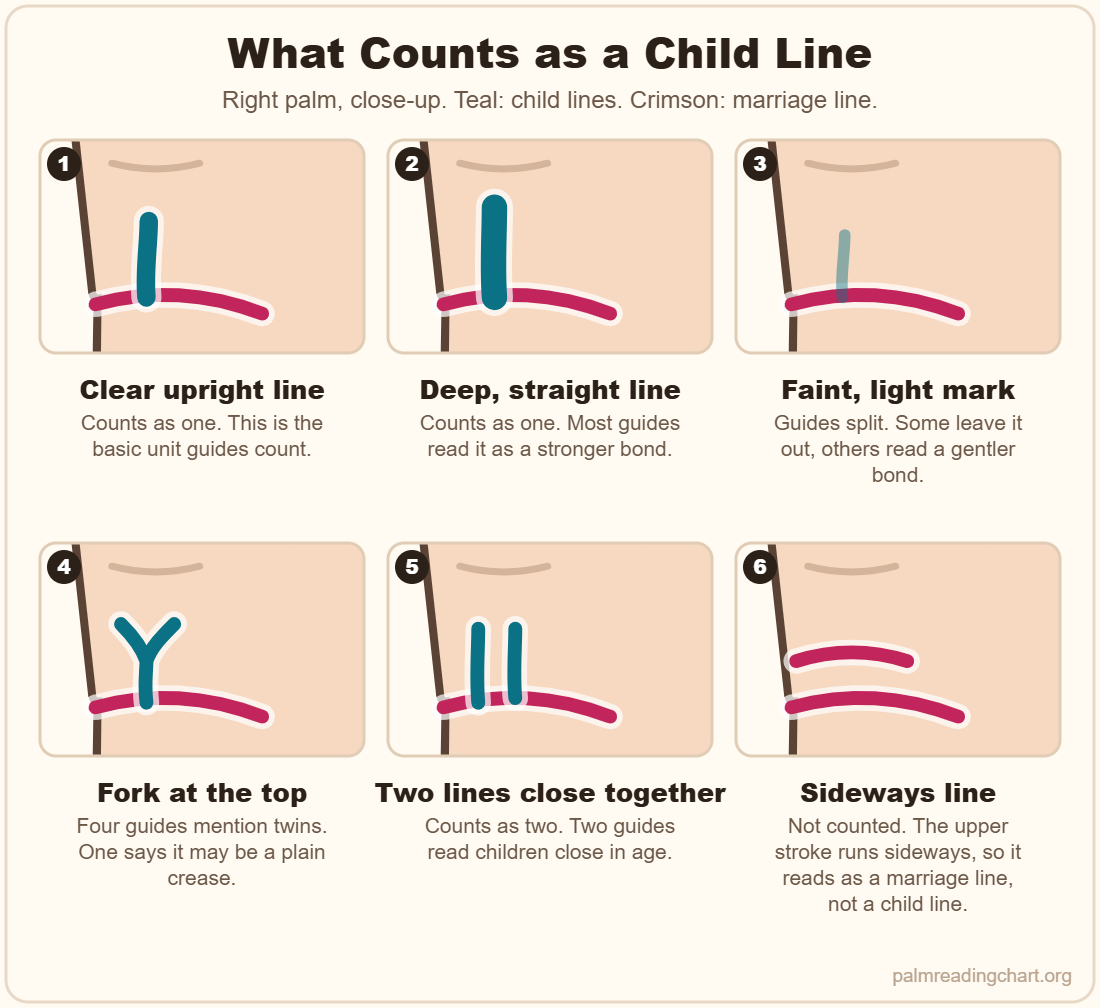
Every guide we read counts upright strokes, and a clear upright stroke is one count. Figure 2 shows the common cases side by side. The guides part ways on the borderline ones.
Clear and Deep Lines
Most guides read a deeper line as the stronger bond, and a clear, straight line is the easiest kind to count. Two guides say most palms show only one to three or four readable lines.
Faint Lines
Three guides leave faint marks out of the count, and four guides read a faint line as a gentler bond. Neither view has evidence behind it. Pick one rule before you count and use it on both hands.
Forks and Close Pairs
Four guides mention a forked line as a folklore sign of twins, and one of them adds that it may be a plain crease. Two guides read lines set close together as children close in age, while one says wide gaps suggest children further apart in time.
Sideways Lines
Child lines stand upright, so a stroke that runs sideways above the marriage line is not counted as one. It looks like another marriage line, as panel 6 of Figure 2 shows.
What the Count Means
A couple of pages still present the count as a plain headcount, with one line for each child. Most guides we read call it symbolic instead: a picture of how many young people matter in your life, not a promise.
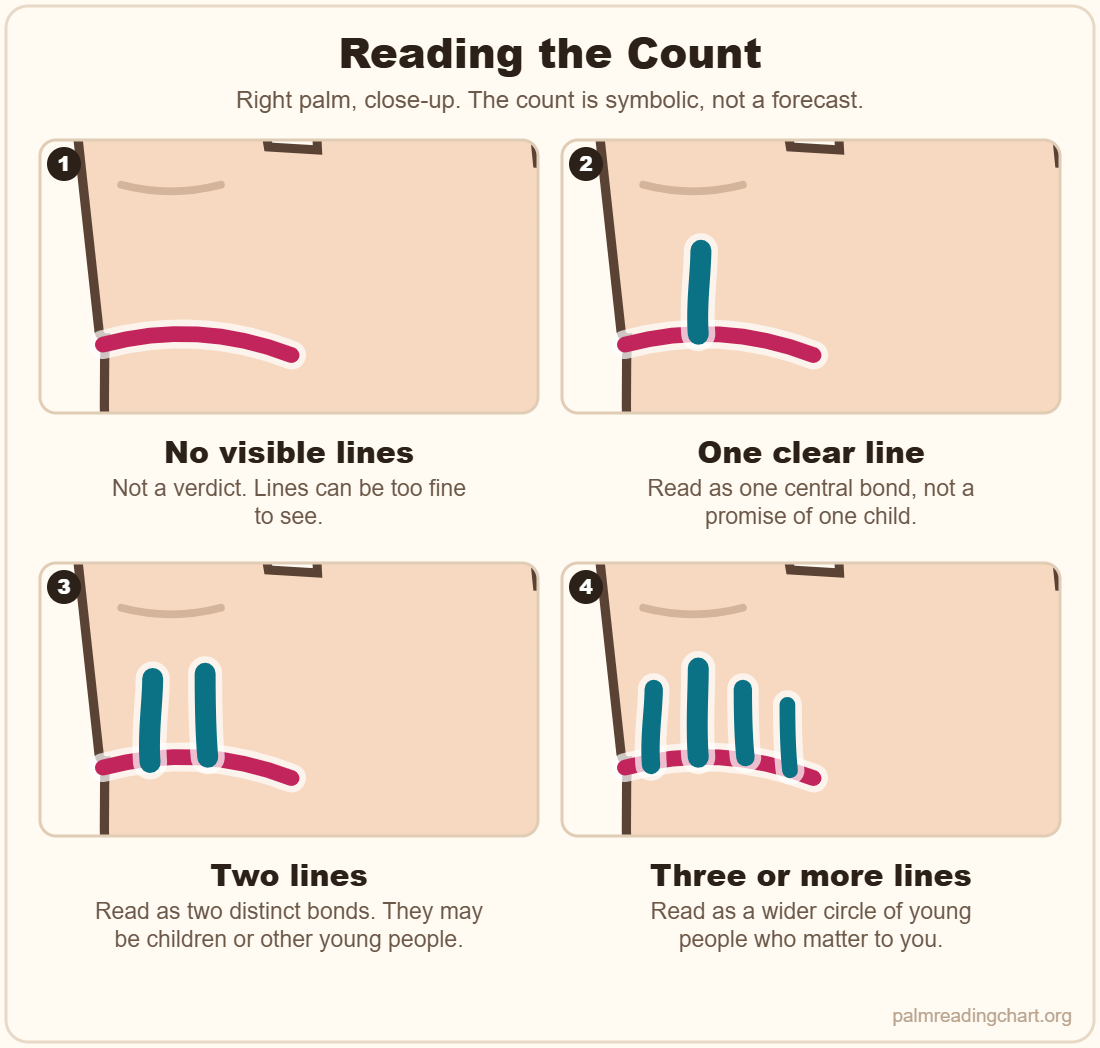
In the symbolic reading, each clear line is read as one young person who matters to you. One way to put it is that one line points to one central bond, two lines to two bonds, and three or more to a wider circle. Figure 3 shows the four counts. Treat them as ways of talking about your life, not as predictions.
| Count | What you see | How the symbolic reading puts it |
|---|---|---|
| No visible lines | A marriage line with nothing standing on it | Not a verdict (four guides say so) |
| One clear line | One upright stroke | One central bond |
| Two lines | Two upright strokes | Two distinct bonds |
| Three or more lines | Three or more upright strokes | A wider circle of young people who matter to you |
| One line deeper than the rest | Unequal depth | Read as the stronger bond (most guides) |
| Faint lines only | Light strokes you can barely see | Skipped by three guides, read as a gentler bond by four |
Do Children Lines Stand Only for Biological Children?
Most guides say no. They allow the lines to stand for children by adoption or in step-families, and four add mentees. Three include creative projects, and one adds pets. In this wider view the count describes bonds of care, not a family tree.
Left Hand vs Right Hand
Most guides use a two-hand split. They compare the hand you write with against the other hand, and read the two differently. Two guides add that more lines on the other hand point to potential not yet used. Two guides say a line that shows on both hands carries extra weight. Our guide to which hand to read explains the method.
Can the Lines Show Timing or Birth Order?
Guides contradict each other here. Their timing claims do not agree, and one guide says no consistent birth-order rule exists. With that much disagreement, treat any timing or birth-order claim as folklore.
What If You See No Children Lines?
Four guides say that a palm with no visible lines is not a verdict. The marks are tiny and easy to miss in poor light, and a missing line says nothing about whether care and family are part of your life.
Marks and Claims This Guide Leaves Out
Some sites attach worrying meanings to unusual shapes on these lines. Some guides also mention the old folklore that a line’s thickness shows a child’s sex, and most of them call it unreliable. This guide leaves both out because they can cause needless worry. The child line guide linked near the top covers the folklore along with the shapes of single lines.
What Children Lines Cannot Tell You
Palmistry has no scientific support, so the lines cannot show whether or when you will become a parent. Several guides warn against using them for family planning. If you have questions about your health or your plans, ask a doctor, not a palm.
Children Line on Palm FAQ
How many children will I have according to the children line?
The lines cannot say. Most guides that mention the count call it symbolic, and palmistry offers no evidence that the lines predict a headcount.
Do men have children lines too?
Guides that mention it say yes. Three say the reading is the same for any gender.
Can children lines change?
Five guides say the lines can change over time, while one says skin lines form before birth. The two claims pull against each other, so treat both with care.
Can I count children lines from a photo?
That is hard to do. The marks are tiny, and glare, blur or an angled camera can hide them. Look at your actual palm in soft daylight instead.
How are children lines different from marriage lines?
Marriage lines start at the outer edge and run sideways across the palm. Children lines stand upright above them, so find the marriage line first.
Conclusion
The children line on palm is a small group of upright strokes above the marriage line, and guides count the clear ones as a symbol of the young people in your life. Count with one steady rule, compare both hands, and remember that the number is no forecast. To place these marks among the other lines, read palm lines and what they mean, follow the step-by-step guide to reading your palm, or open the palm reading chart.
Leave a Reply